Building PhD Programmes
This blog is part of a short series of articles I will be writing to welcome the start of 2026. All opinions expressed are my own and do not represent the views of any individuals or organisations mentioned in the articles. Further, I am a UK-based academic scientist and these articles reflect the UK context.
A new job
At the beginning of 2025, I took on a new challenge becoming one of the co-Directors of the Ellison Institute of Technology Fundamentals of Artificial Intelligence Centre for Doctoral Training (FoAI CDT). This was part of a new strategic collaboration between the University of Oxford and the Ellison Institute of Technology (EIT) which will see the CDT fund up to 100 DPhil studentships across five intakes between 2025 and 2029.
This is the second doctoral programme that I have had the opportunity to help build and develop having previously led the development of the Health Data Research UK-Turing Wellcome PhD Programme in Health Data Science which operated across seven UK universities.
Why did I want to take on this role? In the following I will describe a set of core principles that reflect how I think about doctoral education, what it should be for and why developing such programmes excites me.
Research independence
While the FoAI and HDRUK-Turing PhD programmes differ in subject matter, scale, and context, a defining feature of both these doctoral programmes is a strong emphasis on developing early research independence in doctoral students.
In the UK, a doctorate is a qualification. Doctoral students are not research assistants, nor are they employed to deliver a predefined set of outputs (whether this situation should remain the case is an important debate, but one for another time). That framing matters. If a doctorate is fundamentally a period of training and development, then my bias is to maximise what that opportunity can offer.
For me, that means giving students the chance to conduct truly independent research: research they can call their own, take ownership of, and shape intellectually. Research where they have real agency over the questions they ask, the methods they use, and the collaborators they choose to work with.
For many doctoral students, this may be the only time in their lives when this level of intellectual freedom is realistically possible. Outside academia, and often even within it, research is typically constrained by organisational priorities, funding calls, deliverables, and timelines. A PhD can be a rare protected space to explore ideas for their own sake, to take risks, and to follow curiosity rather than instruction.
There are, of course, many excellent doctoral programmes built around predefined projects and supervisory teams. For some students, this model works extremely well. Knowing exactly what you will work on from day one can reduce uncertainty, provide structure, and allow students to focus on execution rather than exploration. Often the motivation and justification for the research has already been carefully developed, and the student’s role is to carry it through rigorously and efficiently. There is absolutely nothing wrong with this approach.
But there is another group of students - sometimes from the outset, sometimes only once they are given the chance - who want something different. They want to pursue their own interests. To explore new ideas that may not yet be fully formed. To create and build rather than follow a set of instructions. These are the people I connect with most and enjoy working with, and the people I believe doctoral programmes should actively make space for.
Finding opportunities for experience
For example, PhD study in the sciences is still typically a young person’s endeavour. It is genuinely difficult to undertake doctoral study once you have an established career, caring responsibilities, or financial commitments. The opportunity costs are high, the disruption can be profound, and the risks are not evenly distributed.
If someone chooses to make that decision - to step away from a career, to accept financial uncertainty, and to reorient their life around study—then it needs to be for an opportunity that genuinely aligns with their passions and interests. It needs to be something they believe in strongly enough to justify the sacrifice. Asking people to make those trade-offs in order to work on problems defined by someone else, or on projects that do not resonate with their lived experience, is a difficult proposition to defend.
One of the most rewarding aspects of the HDRUK–Turing programme was the opportunity to work with mature students and to connect them with precisely these kinds of opportunities. We recruited doctoral students who had already had substantial careers within the health service—people who had spent years navigating the realities of healthcare delivery, policy, and systems under pressure. These were not individuals in need of being told what the problems were by academic scientists who had never worked in those environments. They already understood the problems intimately.
What they were looking for instead were partners: people and programmes that could support them in developing the tools, methods, and conceptual frameworks needed to tackle the problems they had witnessed first-hand. Independence in this context was not an abstract ideal; it was a practical necessity. It allowed students to bring their own expertise, experience, and motivation into the centre of their doctoral work, rather than treating it as peripheral or anecdotal.
This is one of the reasons I believe doctoral programmes must actively make space for different backgrounds, trajectories, and motivations. Independence is not just about intellectual freedom; it is also about recognising that valuable research questions often emerge from lived experience, and that supporting those questions requires flexibility, trust, and a willingness to move beyond a single model of what a PhD student should look like.
Trust, commitment, and discomfort
But designing programmes that genuinely support research independence is not easy.
It requires a significant degree of trust: trust that students, when given freedom, will rise to the challenge rather than flounder; trust that they can cope with ambiguity and uncertainty; and trust that they will ultimately produce work of depth and quality even if the path there is non-linear.
It also requires commitment. Commitment from directors, supervisors, and institutions to support students through the inevitable moments when things become difficult - when ideas don’t work, when progress feels slow, or when it would be tempting to intervene and “play it safe” by narrowing scope or imposing direction.
True independence also cannot be selectively applied. If we want students to own their research, we also have to allow them to own both their successes and their failures. That can be uncomfortable, particularly in environments that are increasingly risk-averse and outcome-driven. But without that discomfort, independence becomes superficial rather than real.
This is one of the reasons many academics choose not to take on the work of building doctoral programmes from the ground up. It is time-consuming, emotionally demanding, and often invisible labour. It sits alongside, rather than neatly within, traditional academic incentives. And yet, when done well, it can be transformative - for students, for supervisors, and for the research culture more broadly.
Minimising risk, maximising the opportunity for success
If genuine research independence carries risk, then the role of a doctoral programme is not to eliminate that risk, but to manage it intelligently. We can do this by putting in place strong structures and processes that support students without constraining them, and that maximise the chances of success without dictating outcomes. For me, this work starts well before a student ever arrives on the programme.
It starts with recruitment.
Recruitment is not just about selecting students; it is about programme design. It forces you to be explicit about who you are looking for, what you are asking them to do, and what kind of environment you are inviting them into. What characteristics matter? What motivations are likely to flourish in this setting? What skills can be developed over time, and which ones are essential from the outset?
Equally important is how these ideas are communicated. If a programme values independence, ambiguity, and intellectual risk-taking, then that needs to be stated clearly and transparently. Applicants should understand what they are signing up for, and just as importantly, what they are not. Clarity at this stage is not exclusionary; it is respectful. It allows candidates to self-select into an environment that aligns with how they want to work and learn.
This is not always easy.
During admissions season, it is common to hear the phrase “we just want the best students.” While well-intentioned, this is not a practical policy. Best in what sense? According to which criteria? And assessed how? Without clear answers to these questions, decision-making becomes inconsistent, opaque, and vulnerable to bias.
I can already hear the groans about administrative burden. But this is not about box-ticking or bureaucracy for its own sake. It is about careful thought, intellectual honesty, and a commitment to building a robust, defensible, and transparent admissions process. One that aligns with the programme’s values rather than undermining them.
Of course, you do not get this right immediately. Admissions models evolve, and they should. Criteria that seemed important at the outset may turn out to matter less in practice, while other signals only become visible once you have seen multiple cohorts progress through the programme. I have always felt that if I am not actively thinking about how to improve the process - what worked, what didn’t, and what could be tried differently next time - then I am standing still.
With the HDR UK-Turing Wellcome programme, it took around two years before I felt we had a model where I could genuinely say, “yes, this is a good base.” One that we could apply consistently, defend confidently, and refine incrementally rather than overhaul wholesale. That foundation then paid dividends in the later stages of the programme. You can read about our recruitment approach here.
With the FoAI CDT, we are right at the beginning of that journey. There is uncertainty, and there will undoubtedly be adjustments along the way. But that is part of the process. Building doctoral programmes is not about finding a perfect model from day one; it is about creating the conditions in which students with the right motivations and support can thrive, and then learning - systematically and honestly - from what happens next.
That, ultimately, is how you minimise risk while maximising the opportunity for success.
A Team sport
Ultimately, none of this is achievable alone. Designing and running doctoral programmes that prioritise independence, flexibility, and trust is a team effort in the fullest sense.
At HDRUK, I could not have achieved anything without the sustained support of an outstanding Capacity Building team, alongside colleagues in Finance and Contracts who were willing to engage with complexity rather than default to “no.” Equally important was a shared culture of trying to make things work—a willingness to engage constructively with new ideas, even when they did not fit neatly into existing processes (including some of my more unusual ones).
The support of Wellcome was also critical. Their willingness to give us leeway, to tolerate experimentation, and to accept that not everything would be optimised from day one created the space needed to build something genuinely different. That kind of trust - from funders as well as institutions - is a powerful enabler of innovation in doctoral education.
With the FoAI CDT, we benefit from a similarly strong operational backbone. The University of Oxford’s Doctoral Training Centre provides essential infrastructure, experience, and continuity, while the energy, expertise, and resourcing from the Education & Scholarships and AI teams at EIT are a tremendous asset. The combination allows us to move quickly when needed, to adapt processes as the programme evolves, and to support students in ways that would be difficult within more rigid administrative structures.
Innovative approaches to doctoral training place real demands on administration. They require systems that are dynamic rather than static, and teams that are empowered to make decisions rather than simply enforce rules. While this is arguably more expensive to resource than a standard university graduate studies programme, I see it as a strategic investment rather than a cost. Well-supported students are better able to take intellectual risks, to pursue ambitious ideas, and ultimately to generate research with lasting impact.
If research independence is the goal, then administrative excellence is not peripheral—it is foundational. Strong teams do not remove risk, but they make it possible to manage it collectively, and that is what allows both students and programmes to thrive.
Looking for more than one way to do things
Many people ask me why I continue in academia, particularly given the area I work in and the numerous lucrative opportunities that exist outside it. One of the main reasons is talent development through PhD students.
Organisations can recruit and train staff, and they can do this extremely well. But staff are not students. Employment is ultimately a partnership that must serve organisational goals and priorities, even when it is supportive and well-intentioned. The relationship is necessarily shaped by deliverables, timelines, and strategic objectives.
Working with PhD students is different. At least for me, the relationship is not primarily about advancing an organisation’s interests, but about advancing the student’s. My role is closer to that of a mentor or guide: helping individuals develop their own ideas, their own judgement, and their own sense of what kind of researcher—or person—they want to become.
That difference matters. It creates space for exploration, for uncertainty, and for more than one way of doing things. It allows students to take ownership of both their successes and their failures, and it allows me to invest in their development in ways that are not always possible elsewhere.
It is not always easy. Building PhD programmes can be deeply challenging, and at times genuinely tear-your-hair-out frustrating. You see both the best and the worst of academia up close. But the rewards are tangible and enduring: seeing a student progress through your programme to receive a fellowship outside No. 10 Downing Street; seeing research that may seem niche in a UK context go on to improve the lives of millions elsewhere in the world (for example, work on snakebite in LMICs); or investing sustained effort in fair recruitment processes and seeing that work make it possible to recruit an all-female cohort in a traditionally male-dominated scientific area.
This is why I continue to build PhD programmes, even when it would be easier not to. When done well, they create rare environments where independence is real, risk is supported rather than avoided, and talent is developed for the long term rather than the next milestone. That is a privilege, and one that continues to inspire me — because if we get it right, the impact lasts far longer than any single project or paper.
Coming next: In the next blog in the series I will talk about how I approached building a “Fundamentals of AI” CDT and what exactly are the fundamentals of AI?
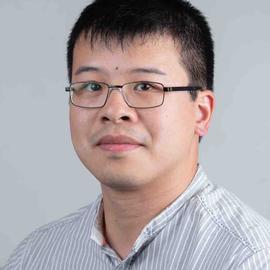
Christopher Yau
Professor of Artificial Intelligence
I am Professor of Artificial Intelligence. I am interested in statistical machine learning and its applications in the biomedical sciences.