Machine Learning
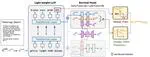
Recently my student Moritz Gogl and I had a paper “Var-JEPA: A Variational Formulation of the Joint-Embedding Predictive Architecture - Bridging Predictive and Generative Self-Supervised Learning” was accepted for presentation at ICML 2026. A preprint paper can be found on arXiv. This blog goes into the details of how this work came about.
Congratulations to Yun Feng whose paper “RLevolution: unravelling the history of genomic instability through deep reinforcement learning” was accepted for publication in Royal Society Open Science.
Congratulations to Moritz Golg whose paper “Var-JEPA: A Variational Formulation of the Joint-Embedding Predictive Architecture - Bridging Predictive and Generative Self-Supervised Learning” was accepted for presentation at ICML 2026. A preprint paper can be found on arXiv.
Congratulations to Natalia Hong whose paper “Imputation Free Deep Survival Prediction with Conditional Variational Autoencoders” was accepted for publication in the Journal of Healthcare Informatics Research.
The group was represented at a number of workshops over the weekend:
-
Multimodal Survival Analysis with Locally Deployable Large Language Models at the NeurIPS 2025 2nd Workshop on Multi-modal Foundation Models and Large Language Models for Life Sciences
We are very pleased to have contributed an article to the Association for Improvements in the Maternity Services (AIMS) journal entitled “Women, Pregnancy and Artificial Intelligence: Opportunities and Cautions in the Age of Digital Maternity” as part of the MuM-Predict consortium. The article demonstrates our commitment to connecting AI research to those it affects.
Congratulations to Ellen Visscher whose paper “Hybrid restricted master problem for Boolean matrix factorisation” was accepted for presentation at AAAI 2026. A preprint paper can be found on arXiv.